 getting-started
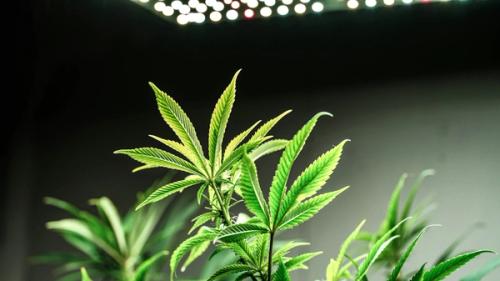
A single untrained cannabis plant will grow straight up like a Christmas tree, put most of its energy into one top cola, and leave the lower branches starved for light.
10 Apr, 2026
How to Train Your Cannabis Plants for Bigger Yields
A single untrained cannabis plant will grow straight up like a Christmas tree, put most of its energy into one top cola, and leave the lower branches starved for light. The grower who pulled 2.5 lbs from a home setup didn’t get there by letting nature run the show. Training was a major part of that equation.Cannabis training is the practice of physically manipulating your plant’s shape during the vegetative stage so that more bud sites end up at an even height, closer to the light source. The science behind it comes down to a hormone called auxin. In an untrained plant, auxin concentrations are highest at the top growth tip, which suppresses the development of lower branches. This natural behavior is called apical dominance. Every training method covered here works by disrupting that dominance and redistributing the plant’s energy across multiple branches.If you’re tracking your grow with the BudSites app, you can log each training session, note which techniques you used, and compare your results across grows. That kind of data is what separates guessing from growing with intention.
What Is Low Stress Training, and Why Do Most Growers Start Here?
Low stress training (LST) is exactly what it sounds like. You gently bend the stems of your plant and tie them down so they grow horizontally instead of vertically. No cutting involved. The plant keeps growing without needing recovery time, which makes LST the safest entry point for beginners.The reason it works so well is simple physics. When you pull the main stem down to a horizontal position, the side branches that were previously shaded are now directly exposed to your grow light. Each of those branches responds by growing upward toward the light and developing its own cola. According to BudTrainer, commercial cannabis operations report yield improvements of 30-50% with LST compared to untrained plants grown under the same setup.Start LST when your plant has about 4-5 nodes, usually 3-4 weeks after germination. At that stage, the main stem is still green and flexible enough to bend without snapping. Use soft plant ties, rubber-coated garden wire, or silicone clips to secure the bent stem. Avoid regular string or twine, which can cut into the stem as the plant grows, and also harbor moisture that promotes mold near the soil line.Check your ties every 2-3 days during veg. The plant will keep trying to reassert apical dominance by sending its highest branch straight up. When that happens, bend it back down. The goal is a flat, even canopy where no single branch towers above the rest.LST is also the go-to method for autoflowering strains. Since autos flower on a fixed genetic timeline (typically 75-100 days from seed), they can’t afford the growth stall that comes with high-stress techniques. LST lets you train continuously without slowing down.
How Does Topping Work, and When Should You Do It?
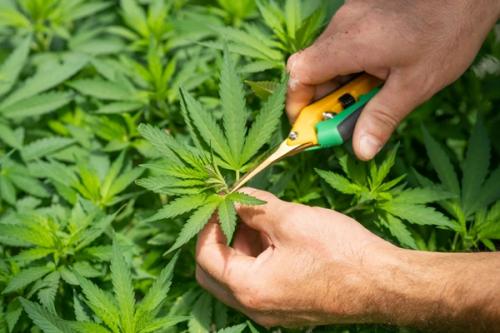
Topping is the most common high-stress training technique. You cut off the very top growth tip of the main stem, and the plant responds by producing two new branches from the node just below the cut. Where you had one cola, you now have two. Top those two branches later, and you have four. Some growers repeat this process until they have 8, 16, or even 32 potential cola sites.The cut itself is straightforward. Wait until your plant has at least 5 nodes, then snip the main stem cleanly above the 5th node at a 45-degree angle using sterilized scissors or a razor blade. The plant will need about a week to recover before you see vigorous new growth from the two remaining growth tips.Topping does more than just double your cola count. When you remove the dominant growth tip, the plant redistributes its auxin supply more evenly across all remaining branches. The lower branches grow thicker and more robust, often requiring less support later in flower. The overall plant structure shifts from a tall, narrow Christmas tree into a wide, bushy shape that makes much better use of indoor grow lights.Timing matters. Topping should only happen during the vegetative stage. Once your plant enters flower, it stops producing new stems and nodes entirely, so topping at that point would just damage a plant that can’t compensate. Give your plant at least a week of recovery after topping before you flip to a 12/12 light cycle.A related technique worth knowing about is FIMming (short for “F*** I Missed”). Instead of cutting the entire growth tip cleanly, you remove about 75% of it. This sloppier cut can sometimes produce four new branches instead of two, though the results are less predictable than topping. FIMming also doesn’t slow vertical growth as much, which can be a plus or a minus depending on your grow space.
What Is a SCROG Setup, and How Do You Build One?
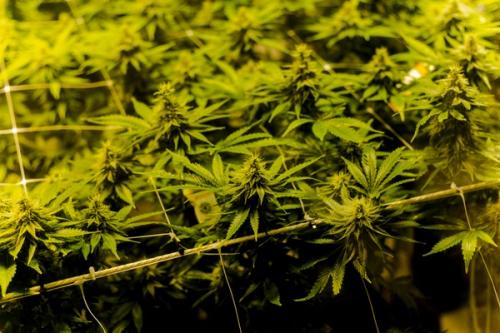
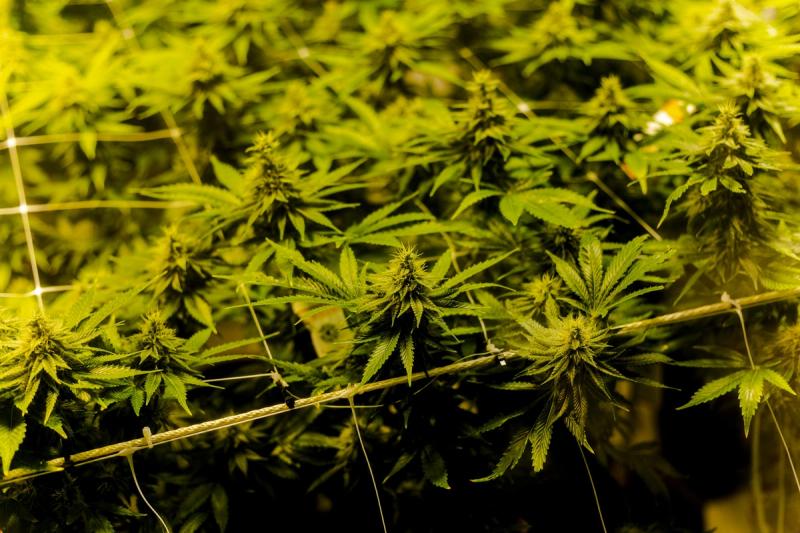
SCROG stands for Screen of Green. It takes the flat-canopy concept from LST and adds a physical screen, usually a trellis net with 2-4 inch openings, stretched horizontally above your plants. As branches grow up through the screen, you tuck them back underneath and weave them outward, forcing horizontal growth across the entire net.The result is a uniform canopy where every bud site sits at the same distance from your light. According to Dutch Passion, a single well-scrogged plant can fill an entire 4x4-foot grow tent when given enough vegetative time.Setting up a SCROG is practical and cheap. You need a trellis net (plastic or string both work, though plastic is easier to clean and reuse), something to mount it on (PVC pipe frame, wooden stakes, or just hooks on your tent poles), and patience. Position the screen about 12-18 inches above your growing medium and let your plants grow into it.Most SCROG growers also top their plants before the screen goes up, since the bushier structure from topping fills the screen much more efficiently than a single-stemmed plant. Once the plant hits the screen, start tucking branches under the net every couple of days, guiding them outward to fill empty squares. Keep tucking through the first 2-3 weeks of flower while the plant is still stretching, then let the colas grow vertically through the screen.One important addition to any SCROG grow: lollipopping. This means removing all the small branches and growth below the screen that will never reach the canopy. These lower sites would only produce airy, underdeveloped “popcorn” buds while stealing energy from the top colas. Cutting them away redirects the plant’s resources where they’ll actually produce quality flowers.SCROG works best with photoperiod (non-autoflowering) strains, since you control the length of the vegetative period and can keep plants in veg until the screen is full. Sativa-dominant strains with their longer, stretchier branches tend to fill screens more naturally than short, squat indicas.
Can Super Cropping Actually Improve Your Harvest?
Super cropping is a high-stress technique in which you pinch and bend a branch until the inner fibers break, while keeping the outer skin intact. The branch drops to a 90-degree angle and stays there. Over the next week or so, the plant repairs the damage and forms a thick, woody knot at the bend site. That knot becomes a point of structural strength and increased nutrient flow.The stress response triggered by super cropping does something interesting. Female cannabis plants produce cannabinoid and terpene-rich trichomes partly as a defense mechanism. Controlled damage from super cropping can stimulate that defense response, potentially boosting resin production and providing structural benefits.To super crop correctly, choose a branch that’s still green and pliable (not woody). Grip it between your thumb and forefinger about 7 cm from the tip and squeeze firmly while rolling the stem back and forth. You’re trying to soften the inner tissue without tearing the outer skin. Once the stem feels pliable at the crush point, gently bend it to a 90-degree angle. If it snaps completely, tape it up immediately with plant tape or electrical tape. Cannabis plants are surprisingly good at healing clean breaks.Super cropping is particularly useful when individual branches grow taller than the rest of your canopy. Rather than raising your light (which weakens the intensity of everything else), you can super-crop the tall branch down to canopy level. It’s also effective during the first two weeks of flower when plants stretch aggressively, and certain colas can shoot up past the others.This technique carries more risk than LST and shouldn’t be your first training experiment. Get a few grows under your belt before attempting it, and never super-crop a plant that’s already stressed from pests, nutrient deficiency, or environmental problems.
What Is Mainlining, and Is It Worth the Extra Time?
Mainlining (also called manifolding) is a structured approach to topping and training that creates a perfectly symmetrical plant. You top the plant above the third node early in veg, remove all growth below that node, and then train the two remaining branches to grow horizontally in opposite directions. Once those branches grow out, you top them again, creating four main branches. Repeat once more, and you have eight.The result is a plant with a central “manifold” hub that distributes water, nutrients, and growth hormones equally to every branch. Every cola develops at the same rate and reaches roughly the same size. Royal Queen Seeds describes the manifold as a Y-shaped hub created by splitting the cannabis stem, allowing growers to double their cola count with each round of topping.Mainlining takes longer than other methods because the plant needs recovery time between each topping, and you’re doing multiple rounds. Plan for an extended vegetative phase of 6-8 weeks from seed before flipping to flower. But the payoff is a canopy so uniform it almost looks artificial, with 8 or 16 fat colas all ripening at the same pace.This method works best with photoperiod strains for the same reason SCROG does: you need control over veg length. Autoflowers don’t give you enough time to recover from repeated toppings. Mainlining also pairs well with SCROG, since the symmetrical branch structure fills a screen evenly without the grower having to wrestle uncooperative branches into place.
How Should You Combine These Techniques?
Most experienced growers don’t stick to a single training method. A common and highly effective combination is topping once or twice, then using LST to spread the resulting branches, and finally installing a SCROG net to manage the canopy during the transition into flower. If individual colas start outpacing the rest during the stretch, super cropping brings them back in line.The BudSites grow app is built for exactly this kind of multi-technique approach. You can log your topping dates, note when you started LST, track how the SCROG is filling in, and snap comparison photos week over week. When your harvest comes in heavier than last time, you’ll know which combination of techniques made the difference, and you can repeat it or refine it on the next run.The key principle across every method is the same: get more bud sites into the sweet spot of your grow light. Whether you do that by bending, cutting, weaving through a screen, or strategically breaking branches, the physics of light distribution don’t change. The closer and more evenly your canopy sits relative to your light source, the more weight you’ll pull at harvest.Start simple. Try LST on your next plant. Once you’re comfortable with that, add a topping. Then build a SCROG frame. Each technique builds on the one before it, and before long, you’ll look at an untrained plant the same way you’d look at leaving money on the table.