On this page
Leaf VPD
Air VPD 1.33 kPa·Target for vegetative: 0.8–1.2 kPa
You’re in the sweet spot for vegetative. Read about vegetative →
Leaf temperature offset (advanced)
Leaves sit a couple degrees cooler than the air under most LEDs. Lower-end gear and HID run leaves warmer; lift this toward 0.
Why this matters: a quick primer on vapor pressure deficit for first-time readers.
VPD heatmap · vegetative (0.8–1.2 kPa)
Dot = your current reading. Olive cells are in range for the selected stage.
What VPD actually is (in plain English)
VPD stands for vapor pressure deficit. It’s the gap between how much moisture the air could hold at a given temperature and how much it’s actually holding, measured in kilopascals. Bigger gap, faster transpiration. Smaller gap, and plants close their stomata and sulk.
Warm air can hold a lot of water. Cold air can hold very little. Relative humidity only tells you how full the air is at its current temperature, not how dry it feels to a leaf. That’s why 60% RH in a 70°F tent (VPD around 0.95 kPa) is a different environment than 60% RH in an 82°F tent (VPD around 1.37 kPa). Same hygrometer reading, different grow.
The number to track is leaf VPD, not air VPD, because leaves run a degree or two cooler than the surrounding air under most LEDs. The calculator above accounts for this with a default -2°F offset, which is a reasonable middle ground for modern LED grows.
Cannabis VPD chart by stage
The right target moves with the plant. Root mass, leaf area, and bud density all change what the canopy can handle, so a seedling and a late-flower plant belong at opposite ends of the chart.
- Seedlings & clones
- 0.4–0.8 kPa · 72–78°F · 70–80% RH
- Vegetative
- 0.8–1.2 kPa · 72–80°F · 55–65% RH
- Early to mid flower
- 1.0–1.4 kPa · 74–80°F · 45–55% RH
- Late flower
- 1.2–1.6 kPa · 72–78°F · 40–50% RH
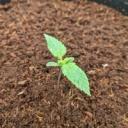
Seedlings and clones (0.4–0.8 kPa)
Tiny root systems can’t pull much water, so a wide VPD just dehydrates the leaves faster than the roots can refill them. Keep humidity high (70–80% RH) and temperature moderate (72–78°F). A dome over clones for the first week or two is usually required, not optional.
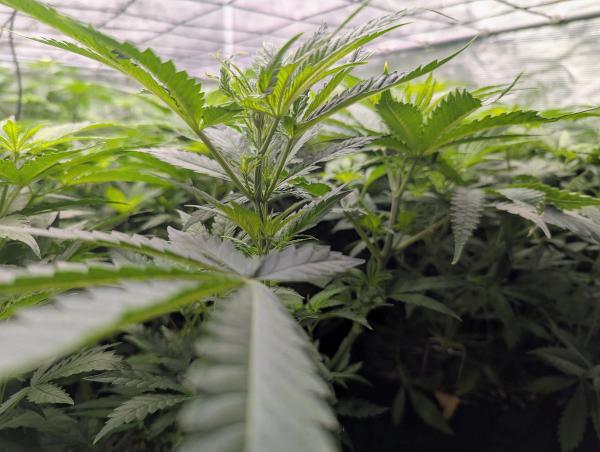
Vegetative growth (0.8–1.2 kPa)
Roots are established and transpiration drives growth. 72–80°F and 55–65% RH puts you in the middle of the band. This is where most home tents naturally sit, which is why veg is the stage where growers accidentally get a good VPD without thinking about it. If you only tune one stage, tune flower instead.
Early to mid flower (1.0–1.4 kPa)
Stretch is winding down and bud sites are forming. Start pulling RH down gradually, not in a single day, but over a couple of weeks. 74–80°F, 45–55% RH. Hitting 1.2 kPa by the end of week 3 of flower is a reasonable checkpoint.
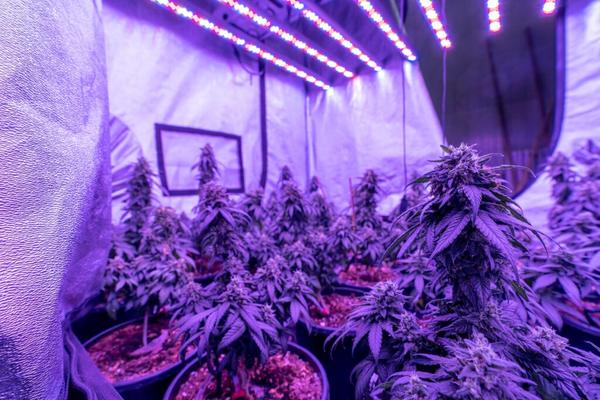
Late flower (1.2–1.6 kPa)
Buds are dense, internal humidity pockets form, and botrytis is waiting. Keep RH at 40–50% and don’t let night temperatures crash so hard that condensation forms on cold surfaces. The higher VPD also nudges the plant to transport sugars and terpenes instead of holding water.
How to read the VPD chart with a $20 hygrometer
Three steps:
- Read temperature and humidity at canopy level, not the floor or the top of the tent. A clip-on hygrometer zip-tied to a support string works. Wait five minutes after opening the tent door before you trust the number.
- Plug both readings into the calculator at the top of this page, or find the cell on the heatmap where your row and column meet. The leaf VPD is what matters, not the air VPD.
- Compare to the stage band. If you’re outside it, decide whether to move VPD up, down, or leave it alone and look at lighting instead.
You don’t need a quantum sensor. You don’t need an infrared thermometer aimed at the leaves. Those are nice if you can afford them, but the default -2°F offset gets you within 0.05 kPa of the truth under a normal LED canopy. The math in the calculator uses the Tetens equation for saturation vapor pressure, which is the same formula behind every commercial VPD chart.
How to lower VPD (when air is too dry or too hot)
Lowering VPD means raising humidity or dropping temperature. In a home tent the cheap order of operations:
- Add a humidifier sized for the tent volume. A 4L ultrasonic unit handles most 4x4 tents; bigger tents need a 6L+ or a second unit.
- Slow the exhaust fan during lights-on. A variable fan controller lets you dial it back without losing air exchange entirely.
- Put a damp towel or a shallow tray of water under the canopy. Crude but effective when you’re a few percent RH short.
- Raise the light 2–3 inches. Less radiant heat on the leaves reduces the leaf-to-air gradient.
- Water more frequently in smaller volumes. More substrate moisture evaporates into the tent.
Low VPD on its own looks a lot like overwatering, because the plant shuts stomata and stops pulling water through the roots. If you grow in coco, rule that out first with the guide on spotting overwatering in coco, then blame the environment.
How to raise VPD (when air is too humid)
Raising VPD means lowering humidity or raising temperature. Home-tent playbook:
- Run the exhaust fan harder. Air exchange is free dehumidification as long as outside air is drier than inside air.
- Add a small dehumidifier. A 20-pint unit moves RH down 10–15 percentage points in a sealed 4x4.
- Raise canopy temperature 2–3°F if the strain tolerates it. Every extra degree raises saturation vapor pressure meaningfully, so a small temperature bump shifts VPD further than you’d expect.
- Prune lower leaves aggressively in late flower. Less leaf area transpires less water into the tent.
- Don’t water right before lights-off. Wet substrate at the start of dark period dumps humidity into already-cool air.
VPD myths and common mistakes
Chasing air VPD instead of leaf VPD. Every commercial chart uses leaf temperature because that’s the temperature that controls stomatal gas exchange. Ignore leaf temp and your targets read 0.2–0.3 kPa too low for a typical LED setup.
Obsessing over VPD when the real bottleneck is light. A light-limited plant won’t grow faster just because you perfected the environment. Get a DLI of 25+ mol/m²/day at the canopy first. After that, VPD is the next limiting factor.
Treating the seedling band like a veg target. Seedlings in 0.8 kPa air look fine for a few days, then stall. Keep humidity up early.
Lowering VPD too aggressively and starving plants of mobile nutrients. Transpiration pulls calcium and magnesium up the xylem. Kill transpiration and you get Cal-Mag deficiency symptoms that look nothing like an environment problem. If you’re running low VPD and seeing interveinal chlorosis on mid-age leaves, work through the common nutrient deficiencies guide and rule that out before you buy more Cal-Mag.
Assuming night VPD matters as much as day VPD. It doesn’t. Lights-off VPD should be lower (0.4–0.8 kPa for most stages) because the plant isn’t actively transpiring. A cool, dark tent at 65% RH is normal and fine.
FAQs
What VPD should I aim for during veg?
0.8–1.2 kPa. If you don’t want to think about it, aim for 1.0 kPa. A 75°F tent at 55% RH with a -2°F leaf offset lands right at 1.02 kPa.
Is VPD or humidity more important?
VPD, because a relative humidity reading on its own is meaningless without the temperature paired with it. 60% RH tells you nothing about transpiration until you know whether the air is 65°F or 85°F.
Does VPD really matter for home growers?
Yes, especially in flower. In veg you can get away with ignoring it because most tents naturally land in the veg band. In flower, particularly from week 4 onward, wrong VPD is how you get mold or slow down bud development.
What VPD for autoflowers?
Same bands as photoperiod plants. Autoflowers don’t have special environment requirements, they just have shorter lifecycles. Stage transitions are compressed, so expect to move from veg VPD to flower VPD faster.
How do I calculate VPD without a sensor?
You can’t, and you shouldn’t try. A $10 digital hygrometer from any hardware store gives you both temperature and humidity. Plug them into the calculator above.
What to do next
If your tent isn’t set up yet, VPD is downstream of gear. A 2x4 tent with a dehumidifier fighting a humidifier is a tax on your electricity bill; pick a tent that suits your climate in the first place. The walkthrough on choosing a small grow tent is the right starting point. Total beginners should read the first-grow beginner’s guide first, because VPD is a tuning knob, not a starting point.
Once you harvest, the math flips. Cured flower wants a low-transpiration environment, roughly 60°F at 60% RH, which is a leaf VPD that would starve a living plant but is exactly right for drying buds. The drying and curing guide covers the targets and the timing.
The cannabis VPD chart at the top of this page saves your last reading, so plug in your current numbers now and watch how VPD moves across a week. Most home growers find that one adjustment (usually a humidifier in veg or a dehumidifier in late flower) moves them from “probably fine” to “consistently in band”, and that’s usually all the environment tuning that matters.